The quick version
- Walking generates heat and standing still loses it fast, so layers you can remove and put back on beat one very warm coat.
- Snowshoes and hiking poles are included. A thermal suit and boots are available on request and subject to availability.
- Passport or ID card, comfortable shoes, socks and a reusable water bottle, plus your own warm layers underneath.
- Assuming the thermal suit is guaranteed. Dress as if you are supplying your own outer layer for the whole four hours.
Layers earn their keep on a slow, cold walk
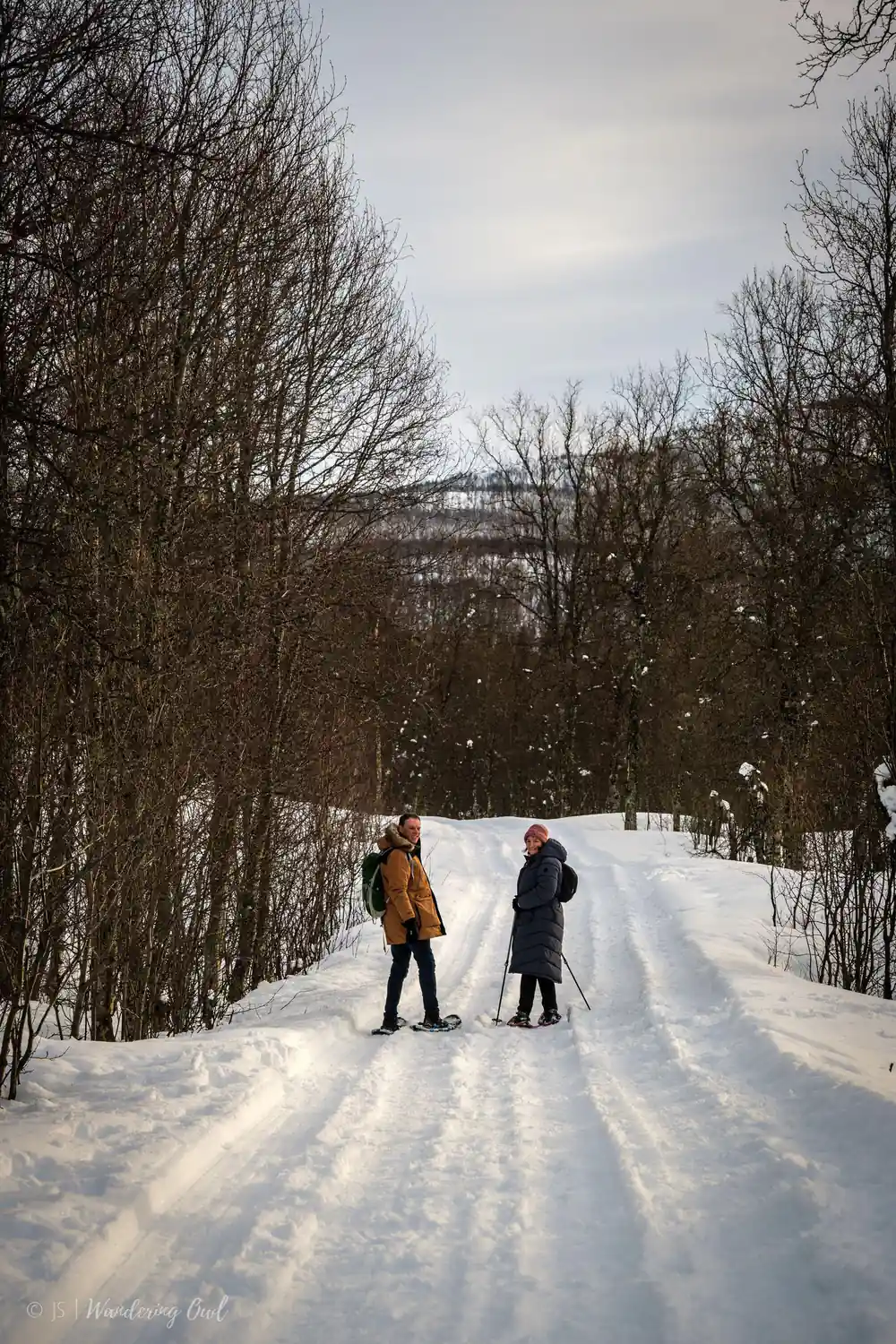
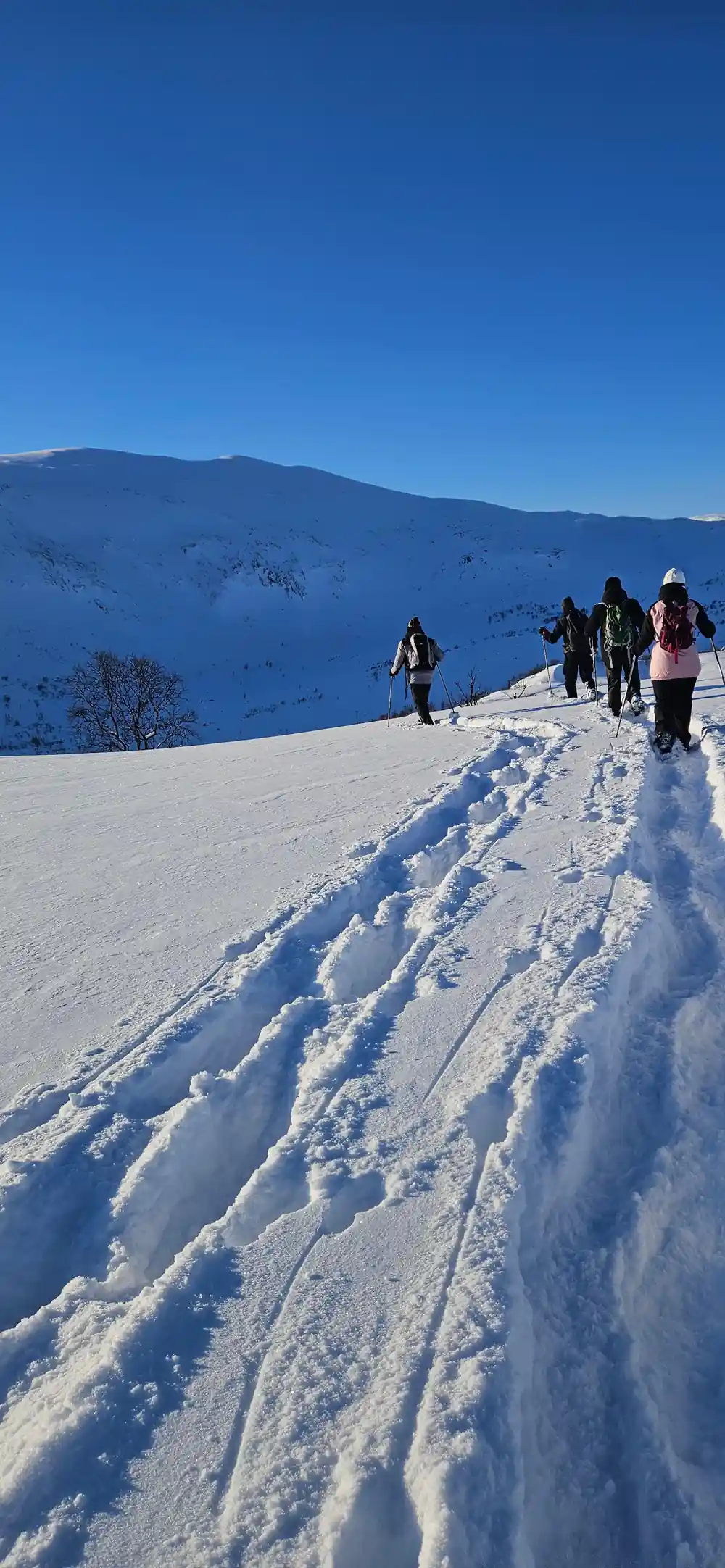
Snowshoeing on Kvaloya is slow, deliberate work. You are lifting a wider frame with every step rather than striding out, and that steady effort is what keeps you warm while you are moving. The moment the group stops, for a photograph or to wait for the rest of the party, that manufactured heat drains away fast. A jacket built to keep you warm while you stand still is usually too warm while you are working, and not warm enough the second you stop.
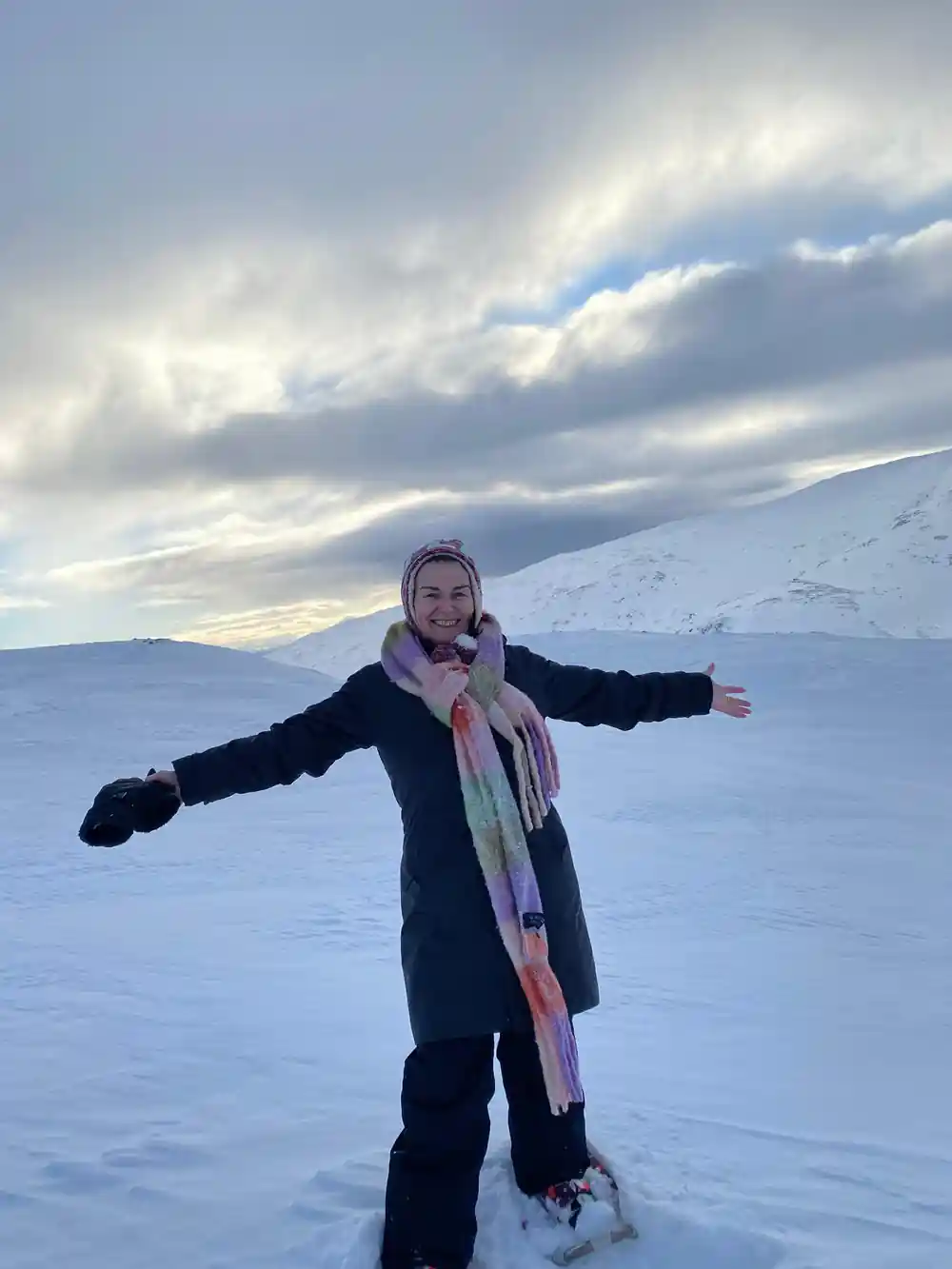
The fix is a system rather than a single garment. A base layer against your skin manages sweat, a mid layer holds the warm air your body makes, and an outer layer keeps the wind off both. Each piece can come off or go back on as the day changes shape, which matters more here than owning one very warm coat: you want less insulation on the walking stretch and more of it the moment you sit down for the picnic.
The thermal suit is on request, not guaranteed
Wandering Owl, who run this hike, can lend a thermal suit and boots, but only on request and subject to availability. That is worth reading twice. It is not a standard part of every booking, and turning up dressed for a short walk on the assumption that a full Arctic suit will be waiting for you is the single most common way this day goes wrong. If a suit is not available when you arrive, you are wearing whatever you brought for the full four hours.
The safer approach is to dress as though nothing extra is coming, then treat a lent suit as a bonus rather than a plan. Snowshoes and hiking poles are included as standard and are handed to you at the start, so those two items are not something to arrange yourself. The suit and boots sit in a different category, and packing your own warm layers means the day works out whichever way that request lands.
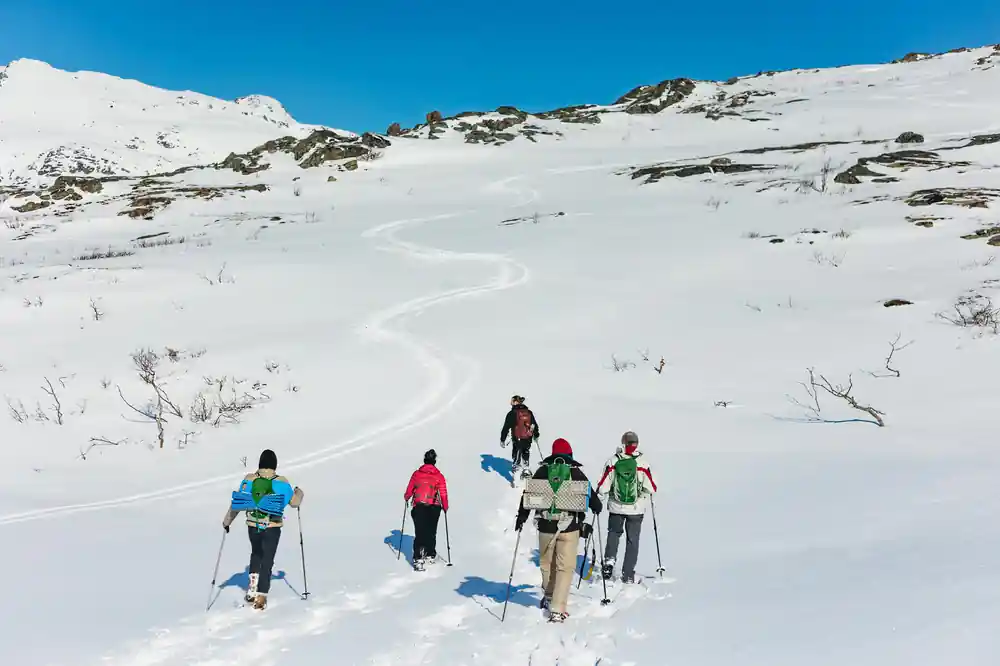
Snowshoes and poles are handed out before the walk onto Kvaloya.
Base and mid layers to pack yourself
Start with something that is not cotton against your skin. A synthetic or wool base layer moves sweat away from your body instead of holding it there, which matters on a walk where you work hard enough to sweat even in the cold. Over that, a fleece or a wool mid layer traps the warm air your body is making. Two thinner layers you can adjust beat one thick layer you cannot.
The booking also includes two drives in a van either side of the walk, so plan for a warm vehicle interior as much as for the cold outside it. A mid layer that unzips or comes off easily lets you cool down on the drive without stripping off everything, then goes straight back on when you step out onto Kvaloya. Trousers work the same way: a base layer underneath ordinary insulated trousers is warmer than one thick pair on its own.
Feet: comfortable shoes and the socks under them
The kit list here is short and specific: comfortable shoes and socks are what you are asked to bring, and nothing more detailed than that is specified. Snowshoes and poles are supplied, so your own footwear only needs to carry you through several hours of slow walking in comfort. Whatever you already wear for a long winter walk is the right starting point.
Socks matter more than most people expect on a day like this. A wool or wool-blend sock keeps working even if your foot gets slightly damp, where a thin cotton sock stops doing its job the moment that happens. A thin liner sock under a thicker one gives you room to adjust if your feet run warm, without needing a second pair of shoes.
4 hours
The booking runs a drive out, a long stretch on foot and a picnic on Kvaloya, and the drive back to Tromso.
Hands, a hat and the low winter light
Gloves and a hat are not on the operator's own bring list, which means they are yours to sort out. Pack both. Hands and head lose heat fast once you slow down, and a spare pair of thin gloves is worth having if the first pair gets damp from snow. A hat that covers your ears is worth more than it looks like it should, especially once the group is standing still for the picnic.
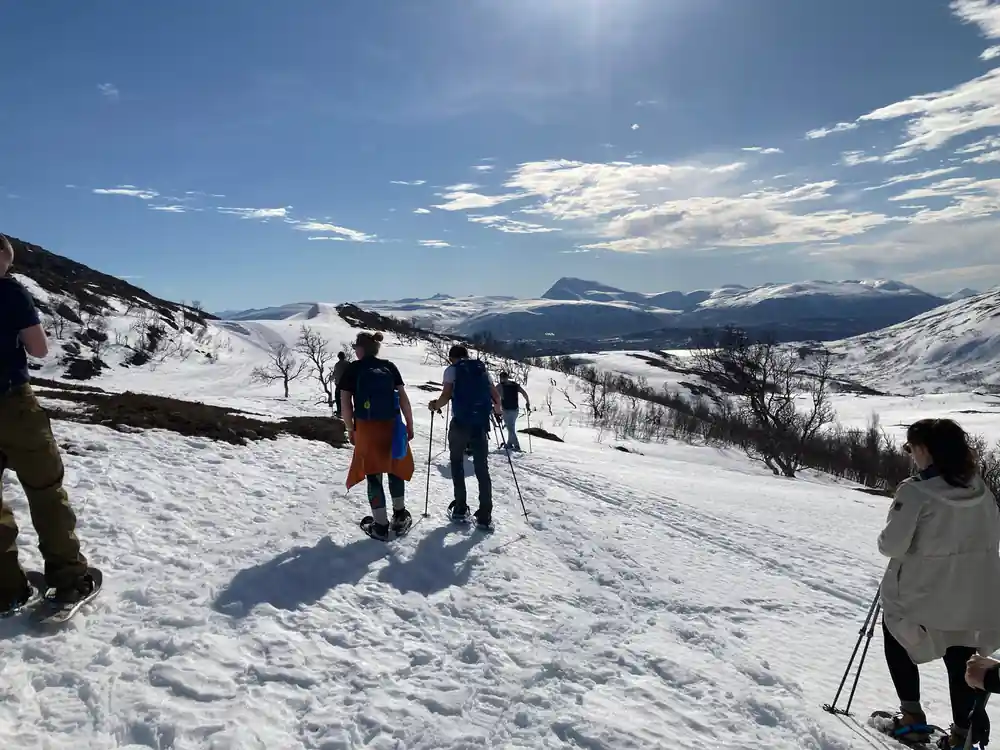
Tromso sits well inside the Arctic Circle, and the middle of a winter day here is short and lit in a low, blue light rather than full daylight. It is not dark, but it is not bright either, and a hat and gloves you can pull on and off easily suit that light better than anything bulky. Your hands will be busy often enough, with poles, with a camera, with a sandwich at the picnic, that gloves you can remove one-handed are worth choosing over ones you cannot.
Waterproofs, the picnic stop and staying dry
An outer layer that blocks wind and sheds snow is worth more than one that is only warm. Snowshoeing puts you in regular contact with snow, kicked up by your own steps and by the group ahead of you, and a soft, absorbent outer layer ends up damp by the end of the walk. A shell that turns that snow away rather than soaking it up keeps the layers underneath doing their job for the full four hours.
The picnic partway through the hike is the point in the day where dressing well pays off most. You go from generating heat by moving to sitting still on Kvaloya to eat, and that is exactly the moment a spare mid layer or a windproof shell earns its place in your bag. Pack it, put it on before you sit down rather than after you start to feel the cold, and you enjoy the stop instead of rushing through it.
Pack the right layers, then check dates for the hike
from US$148Reserve now & pay later