The quick version
- Snowshoeing is walking with a wider stance and more effort per step, not a technical skill you need to train for.
- The group moves at the speed of its slowest walker, so nobody is left behind and nobody fit is held to a crawl.
- Children under six, people with mobility impairments and visually impaired travellers are not accepted on this hike.
- Snowshoes spread your weight across the snow so you stay near the surface instead of sinking in past the knee.
Snowshoeing Is Walking, Not a New Skill
Strap the frames to your boots and the motion underneath does not change: one foot in front of the other, at your own balance, following the person ahead. There is no separate technique to learn beforehand and no skill test at the start of the day. The difference sits entirely in the effort each step now takes, not in the shape of the movement itself. That extra effort is steady rather than sudden, the kind that adds up quietly over an afternoon rather than announcing itself in any single stride.
The snowshoe widens your stance a little, because the frame is broader than a boot and the two feet cannot pass as close together as they do on a bare path. Most people notice this in the first ten minutes and stop noticing it well before the end. It changes how the walk feels, not whether you are able to do it.
Every Step Takes A Little More
Snow, even where earlier walkers have packed it down, gives slightly under the weight of a boot in a way that pavement and dry trail never do. Add the width and weight of a snowshoe and each stride takes a small amount more from your legs than the same stride would on a flat path in ordinary shoes. None of this is dramatic on its own. Spread across a few hours, it becomes the whole difference between snowshoeing and an ordinary walk.
Snowshoes work by spreading your weight across a much larger area than a boot alone, which is exactly why they keep you near the surface of snow that would otherwise take a boot in past the knee. That trade, staying on top rather than sinking, is bought with the wider gait and the slightly heavier step. Sinking to the knee every few paces would be far harder than walking on snowshoes ever is.
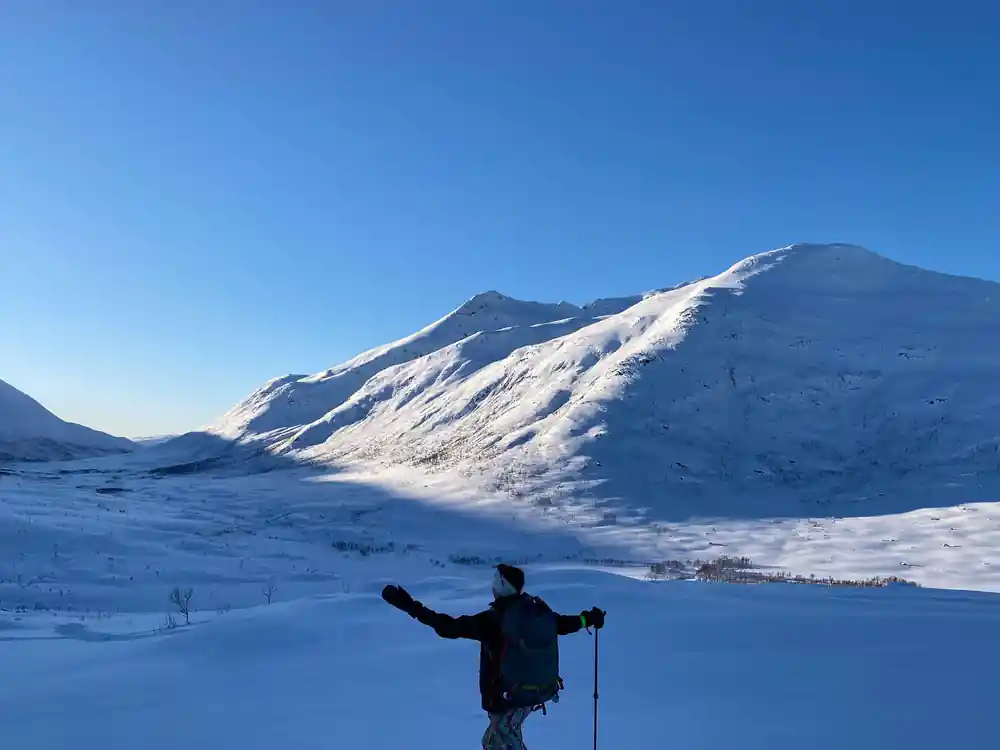
Snowshoes spread your weight so each step stays on top of the snow rather than through it.
The Group Moves At One Pace
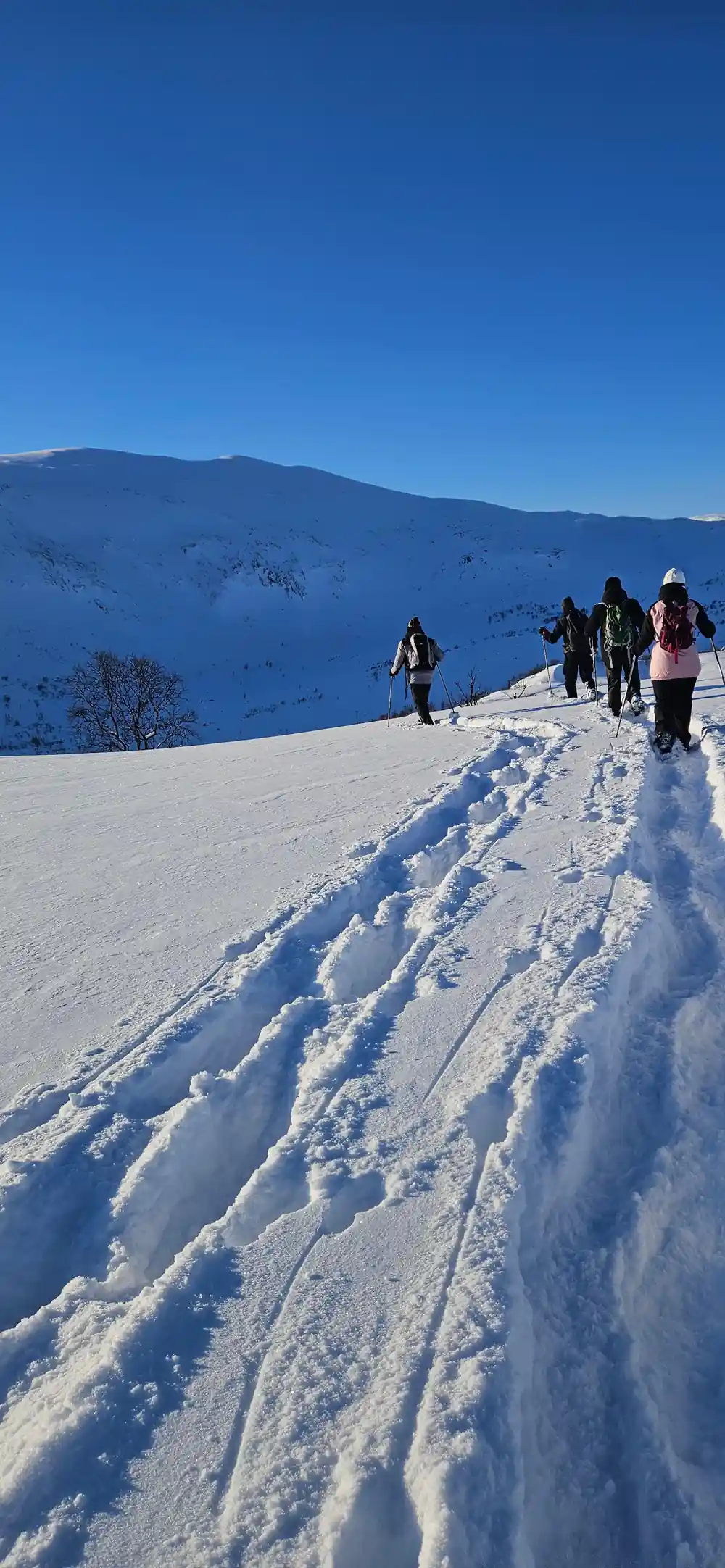
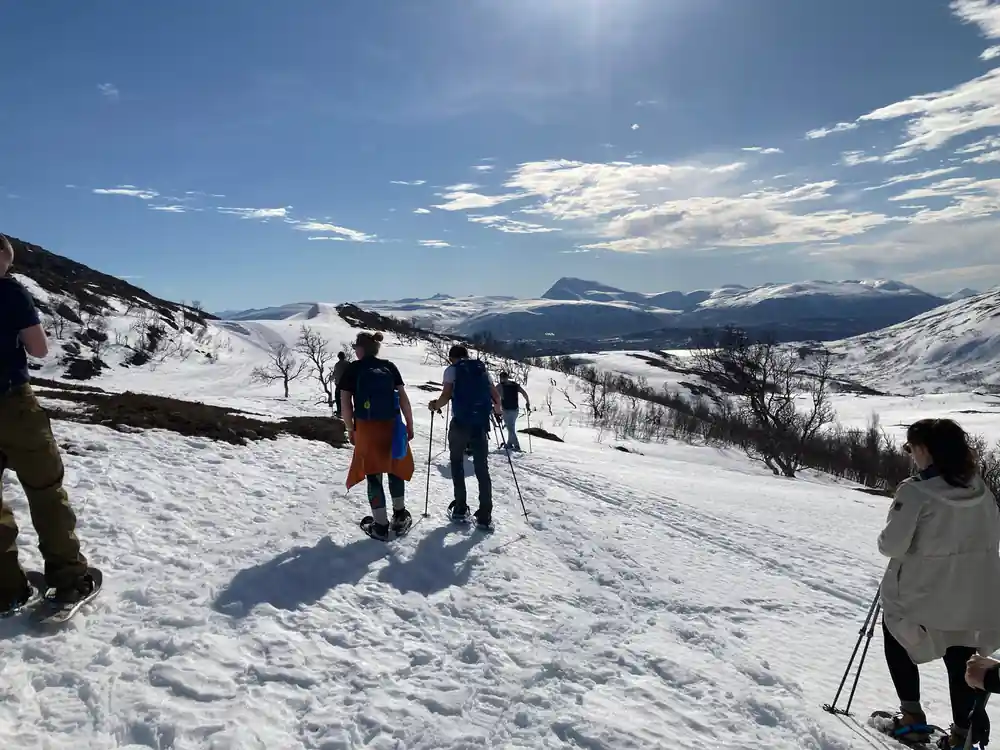
This is a guided walk, not a race, and the group covers ground at the speed of whoever in it is walking slowest that day. Nobody is expected to keep pace with a fitter stranger, and nobody fit is held to a crawl for the whole four hours either. The guide manages the middle ground so the walk suits the people actually on it, not an average booked in advance.
That single shared pace does more work than it looks like. It is why a moderately fit adult and someone a good deal less used to walking can be on the same booking and both have a reasonable day. Stopping is built into the four hours rather than stolen from them: the picnic lunch and the time for photographs both happen inside the booking, not squeezed around it.
What Four Hours on Kvaloya Involves
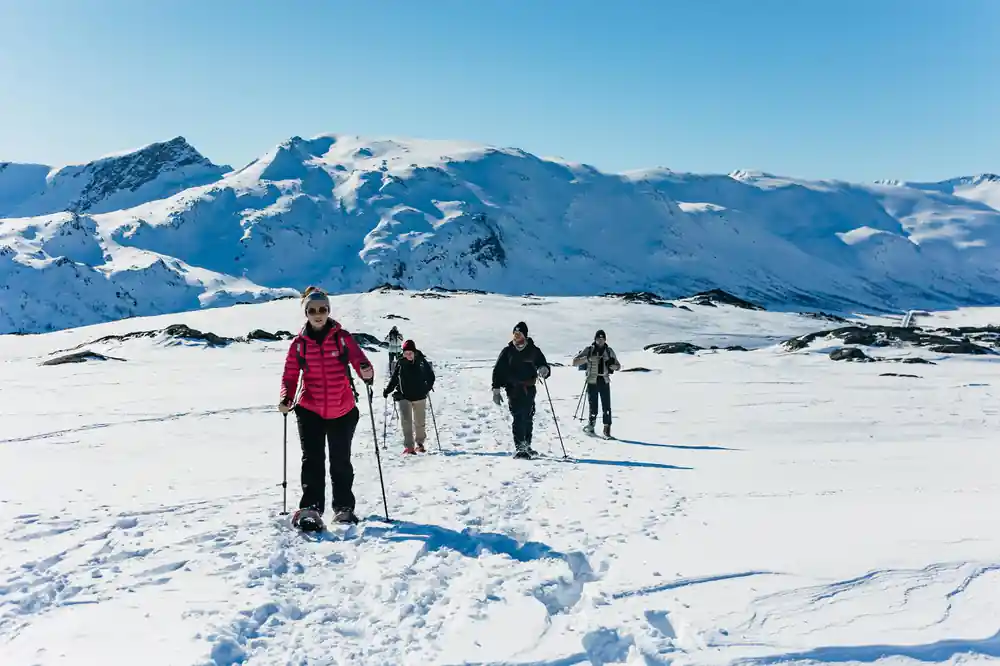
The booking runs four hours from start to finish. A van collects the group in Tromso and drives out to Kvaloya, the large island just west of the city, with the return leg mirroring the outbound one. In between sits the walk itself, together with a picnic lunch and time for photographs; the guide, the snowshoes and the poles are all provided as part of the booking.
Snow conditions vary through the season and across the island, from a surface earlier walkers have already flattened to snow that has not been walked yet. Snowshoes handle both, but the less packed the snow, the more of that extra per-step effort you actually feel underfoot. Nobody chooses in advance which kind of snow the group happens to meet.
Under 6
Children younger than this are not accepted on the snowshoe hike, whatever their own fitness might be.
The Fitness This Actually Asks For
If you can walk on your own feet for a few hours without it becoming a problem, whether that is round a city, along a coastal path or through a park, you can do this. It is not a fitness test and it is not mountaineering: no ropes, no scrambling, nothing beyond the snowshoes and poles that come with the booking.
The honest comparison is with a longer walk on a normal path rather than a short one. Someone comfortable on their feet for an afternoon, but who rarely walks that long, should expect four hours on snowshoes to ask more of their legs than four hours on pavement would. It is more tiring than the same distance on a cleared path, not because anything about it is extreme, but because every step is doing slightly more work than usual.
Who This Hike Is Not Right For
This snowshoe hike does not accept children under six, people with mobility impairments, or visually impaired travellers. These are firm restrictions on the booking, not general advice, and they hold regardless of how fit or willing anyone in the party might be.
Everyone else who manages a normal walking pace for a few hours is the audience this trip is built for. Four hours sounds long written down, but it covers the drive out and back as well as the picnic and the photograph stops, and the walking inside it moves at a pace the whole group shares rather than a stopwatch anyone has to beat.
See dates for the Kvaloya snowshoe hike
from US$148Reserve now & pay later