The quick version
- West of Tromso, joined to it by road rather than a boat crossing, sits Kvaloya, an island whose Norwegian name translates as whale island.
- A wide snowshoe frame turns a narrow footprint into a broad one, which is what keeps you riding across drifts a bare boot would sink straight through.
- The booking runs as one guided day: out to Kvaloya, a long stretch of walking with a picnic on the island, and back to Tromso.
- The walk starts outside the Scandic Ishavshotel in Tromso, and hotel pickup and drop off are not included.
Hiking Continues Through The Tromso Winter
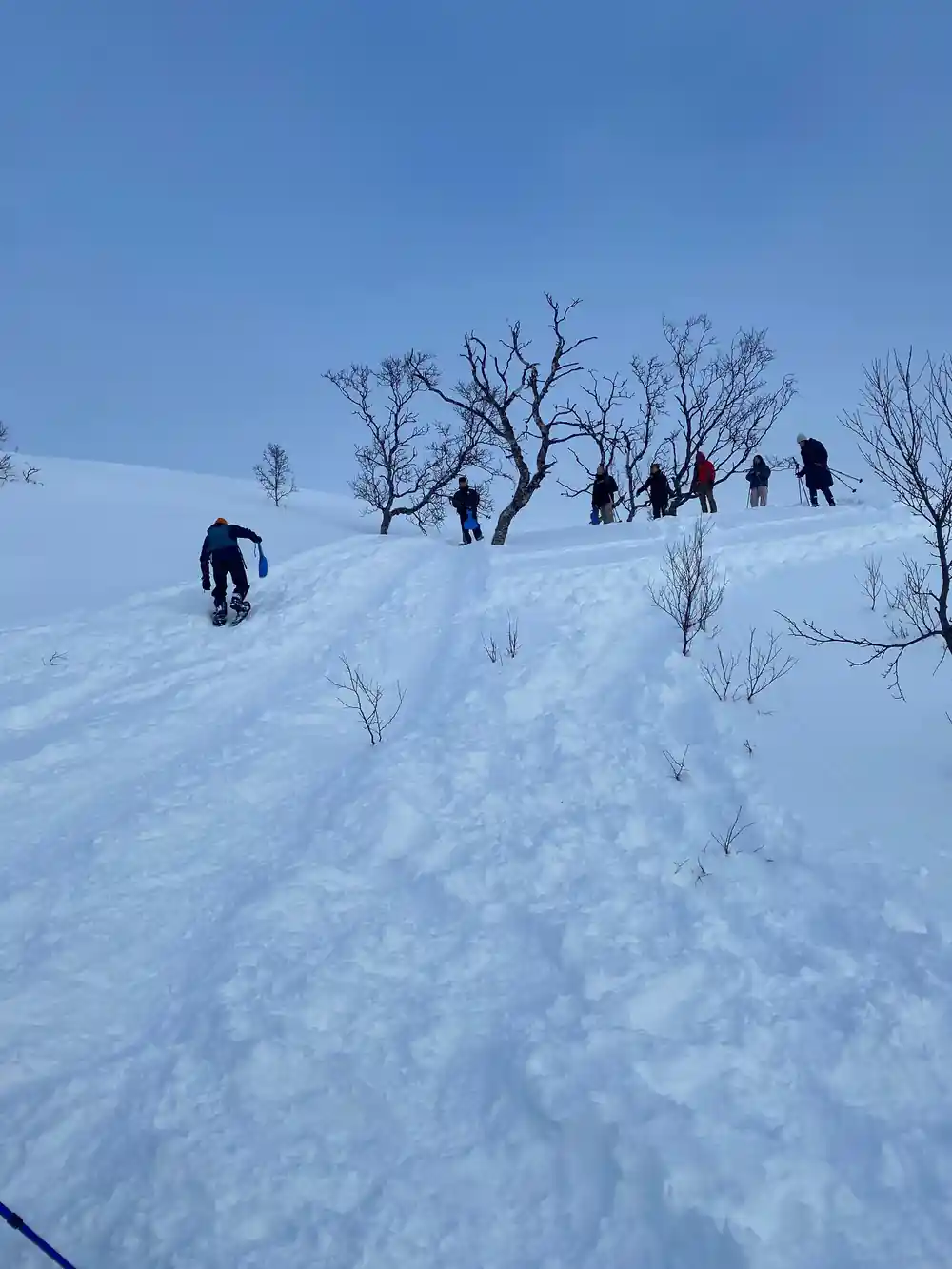
Ask whether Tromso winter hiking is actually a thing, and the honest answer is yes, on ground that most visitors never think to picture with a boot print in it. The trails around the city do not close when the snow arrives. They change shape, and a guide who knows where the snow sits and where it hides ice takes you onto them anyway, with snowshoes doing the work your ordinary boots cannot.
This is not a stroll along a cleared path. It is a walk across a landscape that has been rearranged by snowfall, on ground that a summer visitor would recognise and a winter visitor would not. The appeal is not spectacle. It is the chance to be out in a season most people only watch through a hotel window.
Kvaloya, The Island West Of Tromso
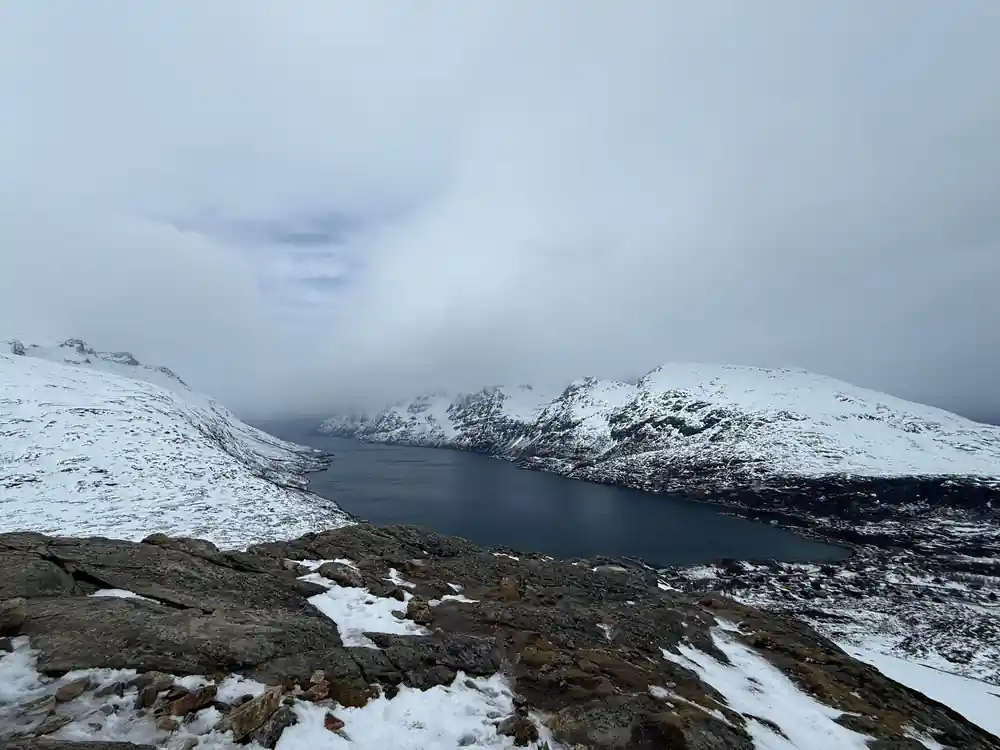
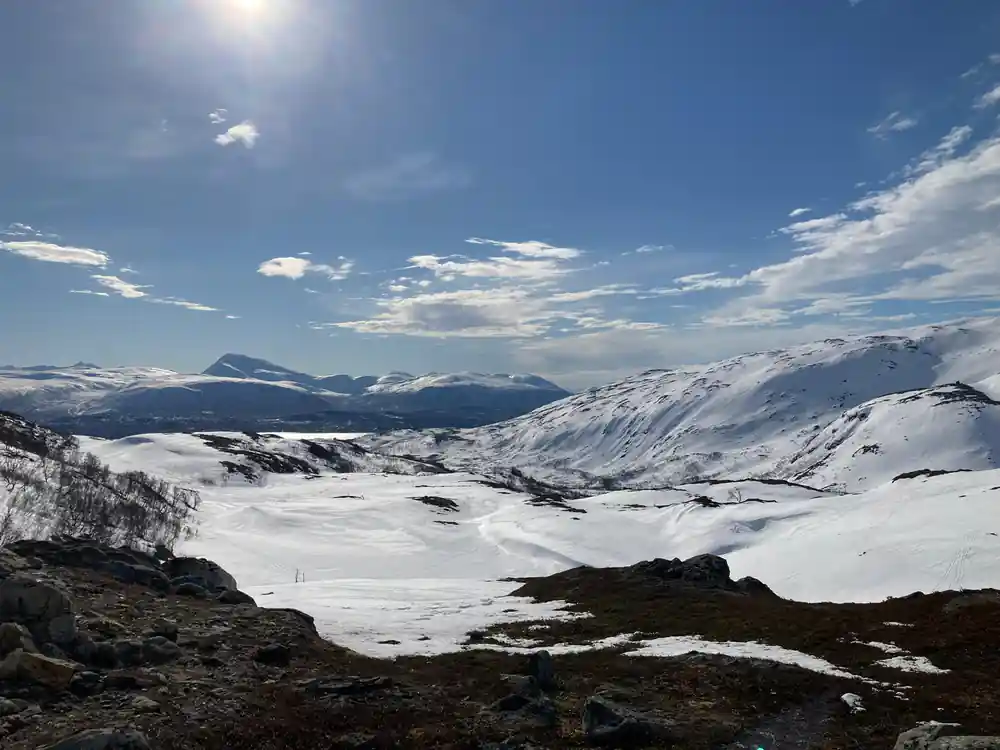
The island in question is Kvaloya, a mass of rock and mountain lying close enough off Tromso's western side that the drive there is by ordinary road rather than by boat. The Norwegian name translates as whale island, a fact that has nothing to do with the snow and predates any of this year's visitors by a very long time. Mountains rise straight out of the water along its edges, and the ground between them folds into valleys that run down toward the fjords.
In summer this is walkable, ordinary hill country. Under snow it stops being ordinary. The valleys fill in, the outlines of the mountains soften, and the paths that cross the island in the warmer months disappear under a surface with no edges and no signs. A guide who knows the ground is the difference between a walk and being lost on it.
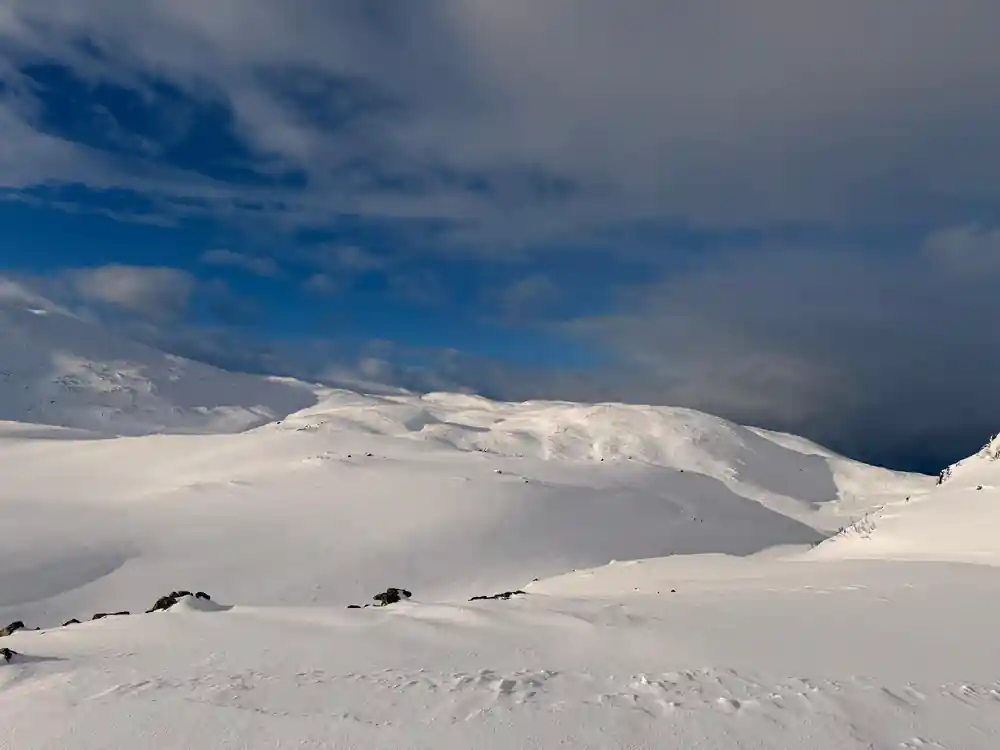
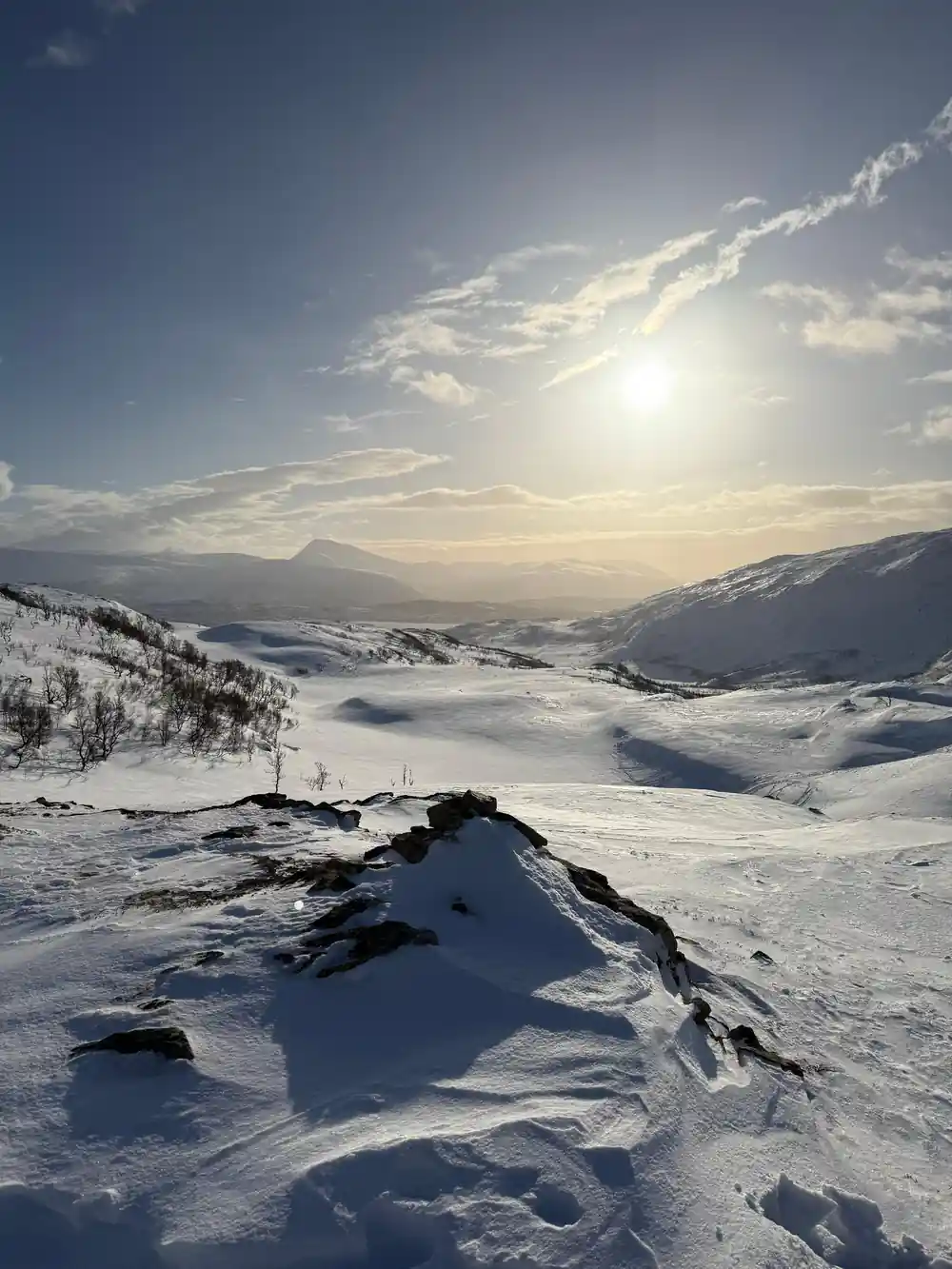
Snowshoe tracks crossing open ground on Kvaloya in the low winter light.
The Same Ground, A Different Place
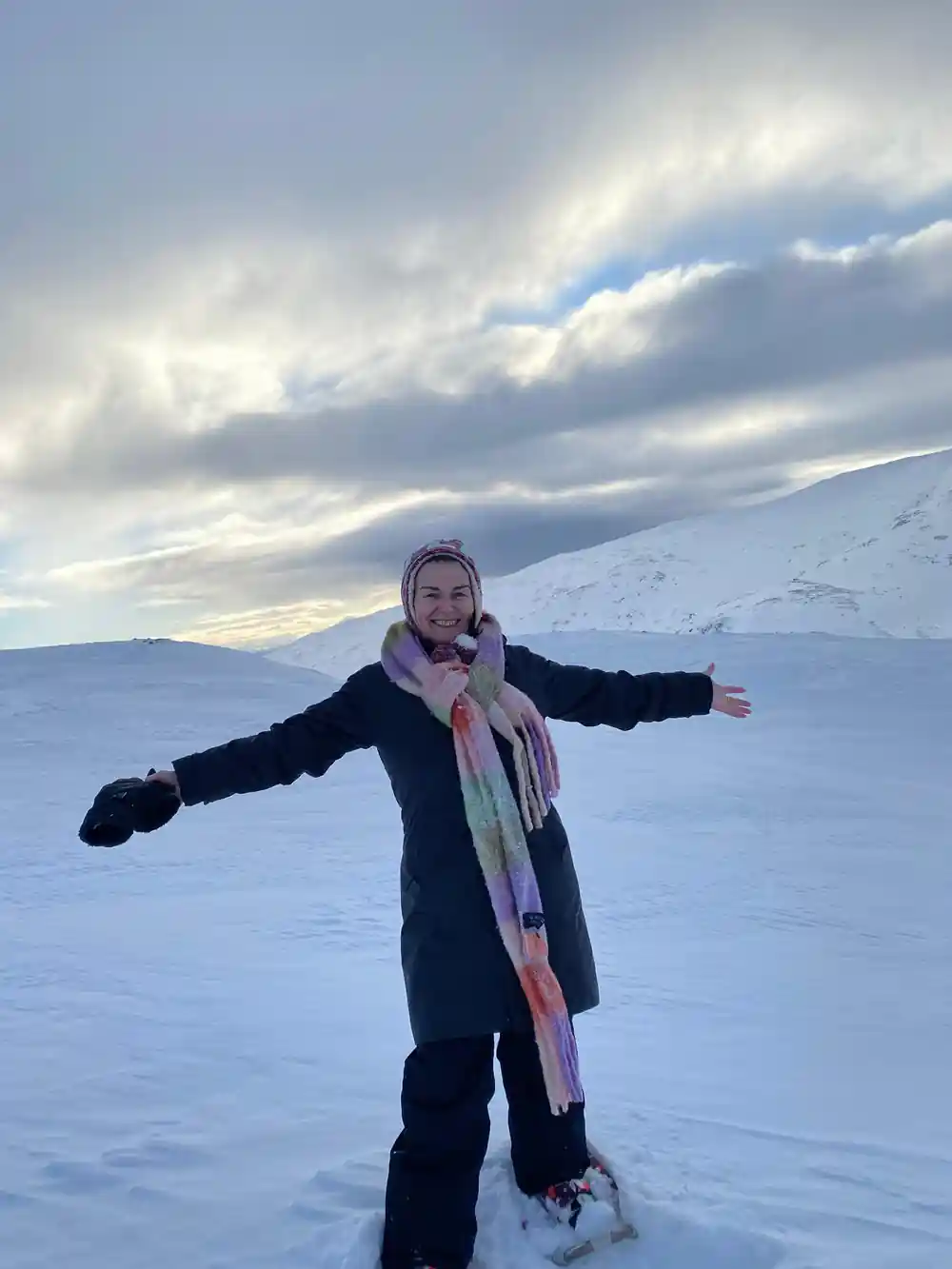
A visitor who has only seen Kvaloya in summer has seen a different island. The rock, the water and the shape of the mountains are the same, but almost nothing else is. Colour drains out of the landscape until it is reduced to white ground, dark rock where the slope is too steep for snow to sit, and whatever the sky is doing overhead.
That reduction is the point of coming in winter rather than in summer. A green hillside asks nothing of you and tells you little. A snow-covered one holds the shape of the wind that shaped it, the line of an animal that crossed it before you did, and a silence that a summer hillside, full of insects and running water, never has.
What Snowshoes Actually Do
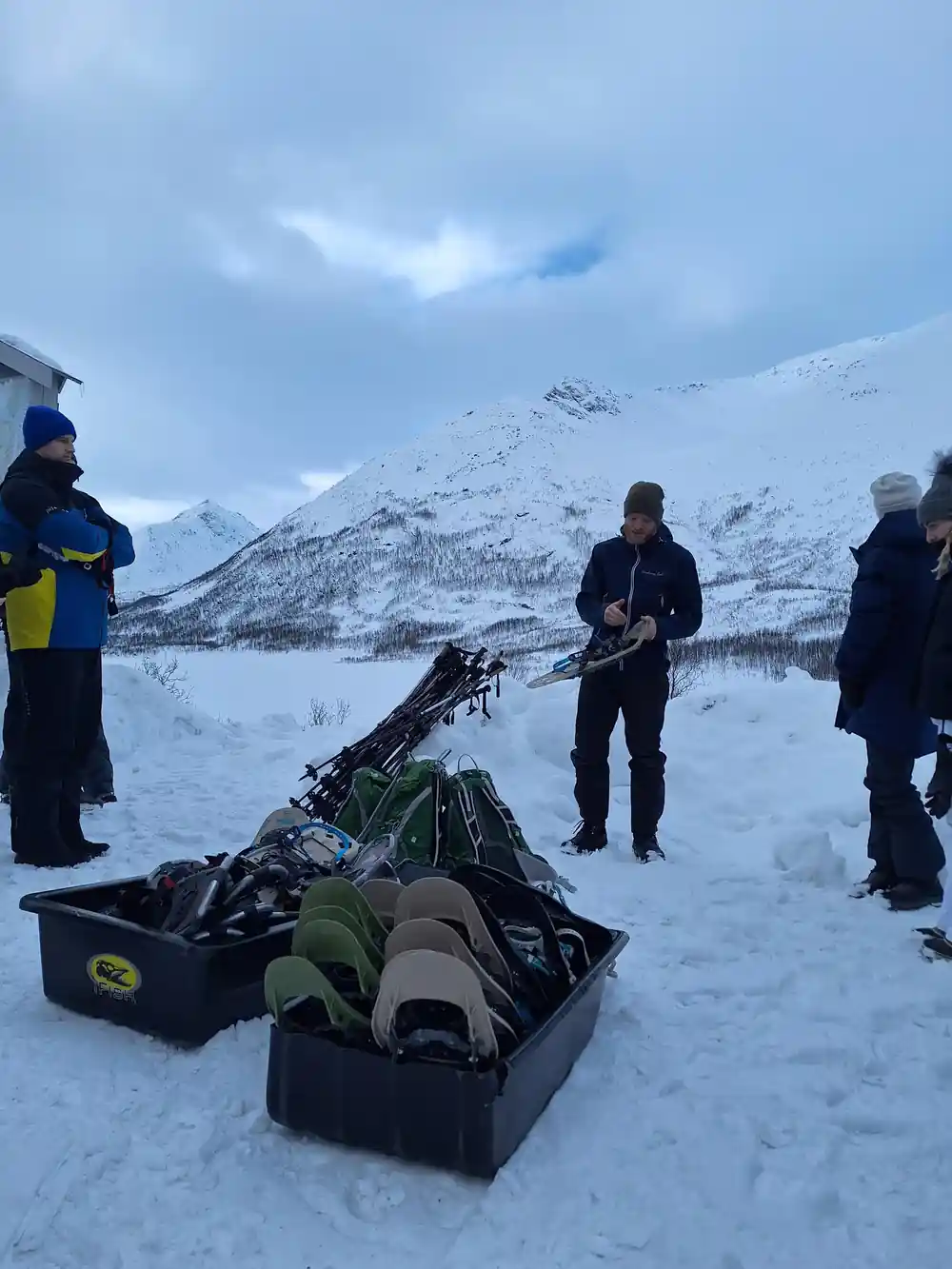
A snowshoe is not a clever piece of equipment so much as a simple one doing an obvious job well. Strapped under a boot, its wide frame turns a narrow footprint into a broad one, and that spread of pressure is the whole trick: it is what lets you ride across a drift that a bare boot would punch straight down through, sinking to the shin or worse. The mechanics are plain and the effect is immediate, the first time the ground holds you where it would not have without them.
The walking itself has its own rhythm, wider and slower than an ordinary stride, with the frame of the shoe catching and releasing the snow underfoot with each step. Poles are handed out alongside the snowshoes, and after the first stretch of ground the two together stop feeling like equipment and start feeling like the way you move here.
4 hours
A guide leads the whole walk and hands out the snowshoes and poles; a picnic lunch on Kvaloya sits in the middle of the day.
The Colour Of A Tromso Winter Day
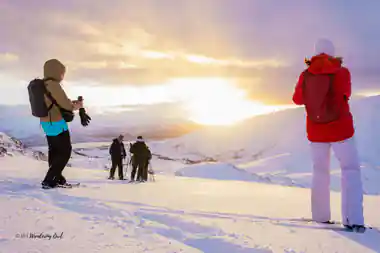
There is a particular light that sits over Kvaloya through the middle of a winter day, low and blue rather than bright, the kind that never quite becomes the full daylight a visitor from further south expects. It falls across the snow at an angle that never steepens, so shadows stay long from whenever they start to whenever they end.
Snow answers that light strangely. Flat ground under an open sky reads as pale blue rather than white, while a slope angled toward what light there is can flare almost silver. None of it looks like an ordinary winter afternoon elsewhere. It looks like its own particular colour, one that only exists here and only in this season, gone the moment summer returns the ordinary daylight to the island.
A Quiet You Notice Immediately
Snow absorbs sound the way nothing else in this landscape does. Once you are a short way out from the van, the ordinary background noise of a town, an engine, a voice from another street, simply stops reaching you, and what is left is close and small: the compress of your own snowshoe settling into the surface, the tap of a pole finding the ground, your own breathing.
It is a quiet that most travellers only associate with somewhere remote, and here it arrives within a short drive of a city. Conversation on the walk tends to thin out on its own, not because anyone asks for silence, but because the landscape makes noise feel like the wrong thing to add to it.
What The Guided Day Involves
The booking runs as a single guided day: a drive out from Tromso to Kvaloya, a long stretch of walking and a picnic lunch on the island itself, then the drive back. A guide leads throughout, snowshoes and poles are provided, and the picnic is a light sandwich with biscuits, water and something hot to drink, eaten outdoors partway through the walk. A thermal suit and boots are offered on request and depending on availability, which means they are not guaranteed, so dress for real winter before you arrive rather than assuming extra layers will be waiting for you.
The walk starts outside the Scandic Ishavshotel in Tromso, and you make your own way there: pickup and drop off from your own accommodation is not included. Bring a passport or ID card, comfortable shoes for the drive and the transition into snowshoes, warm socks and a reusable water bottle. It is guided in English and offered with free cancellation.
It is not suitable for children under six, for people with mobility impairments, or for visually impaired travellers, and alcohol, drugs and plastic bags are not allowed on the walk. Within those limits it asks nothing more specialised than a willingness to be outside in the cold for a few hours, on ground built to be crossed on snowshoes rather than on foot alone.
Walk Kvaloya's Winter Quiet For Yourself
from US$148Reserve now & pay later